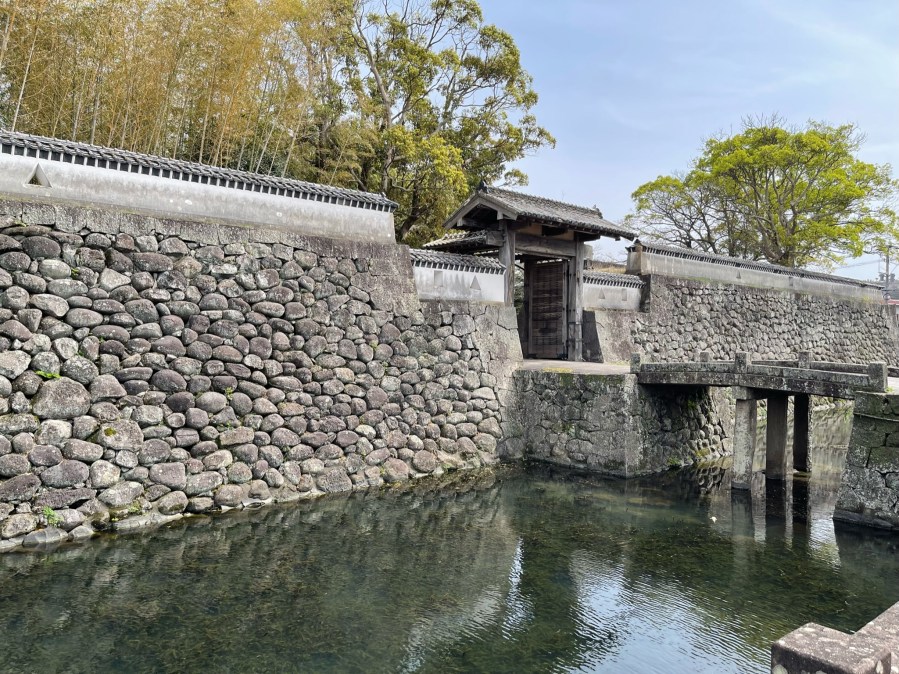
25 March 2023
I first learned about the Gotō Islands (五島列島) through the slice-of-life / comedy manga Barakamon, which focuses on how a calligrapher from Tokyo adapts to life on a remote island (Fukue Island, 福江島) and his interactions with the local people on the island. The heartwarming story piqued my interest in the island, and I soon realised that it is not that far-off from Nagasaki.
There are five main islands in Gotō (thus the name), the largest and most populated being Fukue Island. The island can be reached via ferry, high-speed boat or plane, all of which will be outlined at the end of this post. The cheapest is the ferry, although it would take 3-4 hours from Nagasaki. High-speed boats and planes are faster, however they will dent your wallet a little. I opted for the plane as I knew that my luggage would exceed the limit allowed for the high-speed boat (though it is possible to transport your oversized luggage separately).
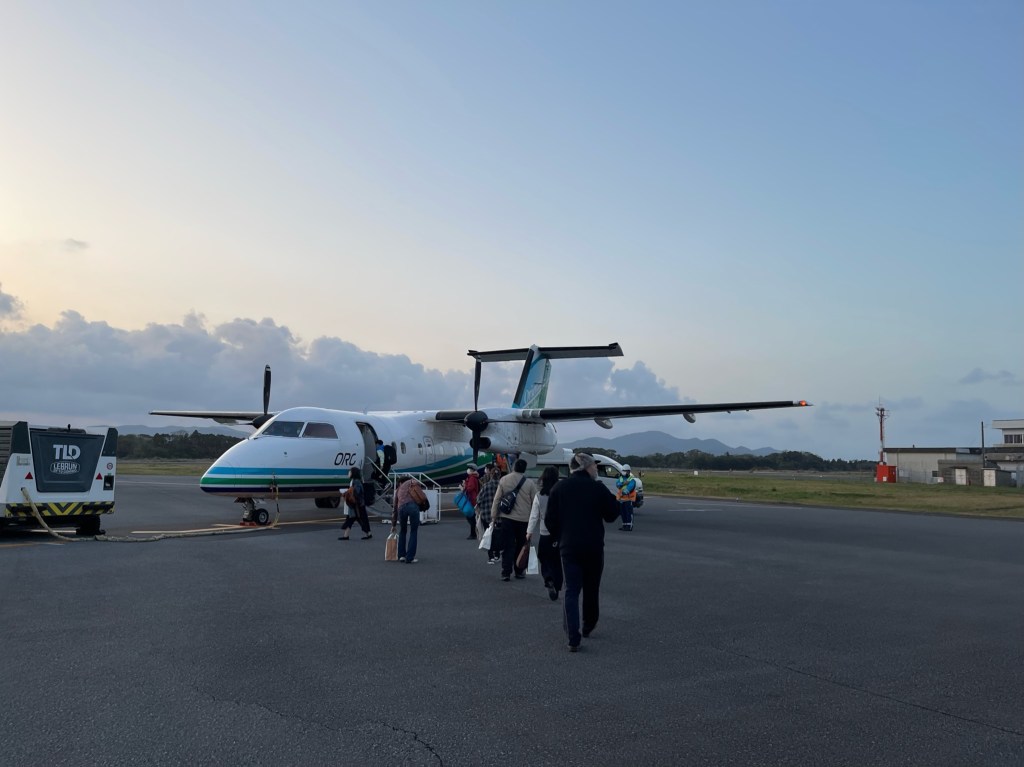
For those traveling by ferry or boat, the arrival port in Fukue is a walking distance to most of the main hotels, so there is not much to worry about. However, if you were to fly into the island, please remember that the Gotō-Fukue Airport is just a small airport. There would be barely any taxis waiting outside (you can call the taxi company) while the buses are infrequent and are timed to the flight arrival time (so, do not miss it). Alternatively, you can arrange for your rental car company to pick you up (should you choose to rent a car, which I strongly recommend). It is also probably worth checking with your hotel on whether they provide such services.
I was lucky enough that there was one empty taxi waiting outside the airport; the drive to my hotel took roughly 15 minutes. After leaving my luggage with the hotel, I started off my exploration on the island. I walked around in the first half as most of the places of interest in town are within walking distance. The first stop is the city museum.
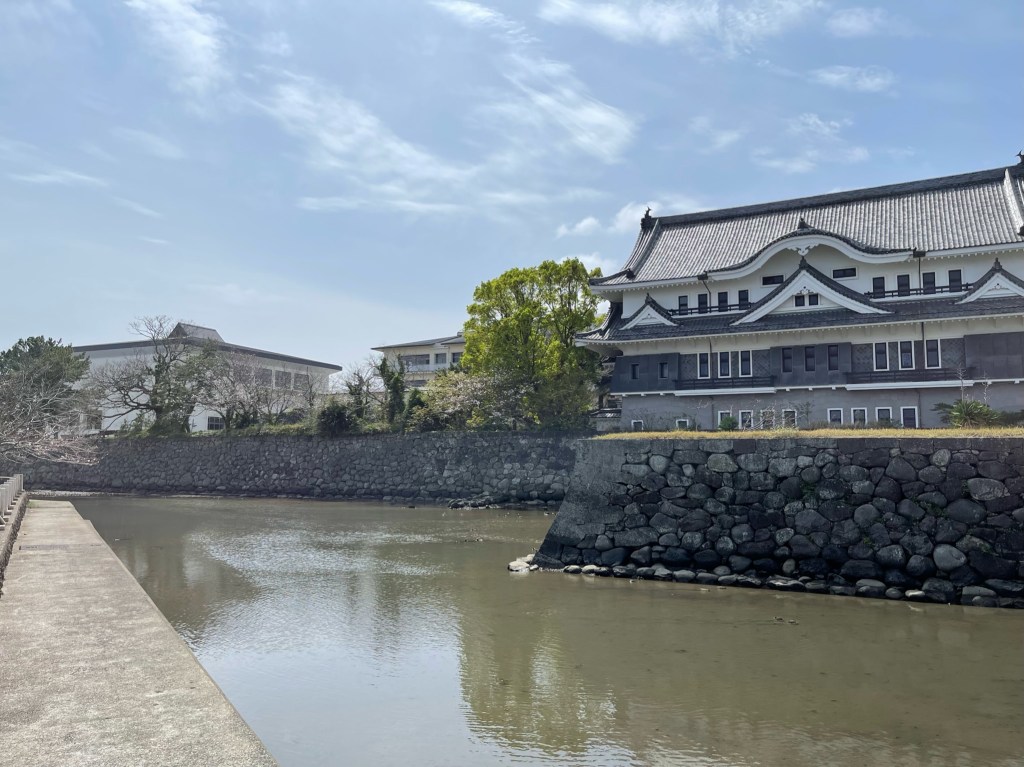
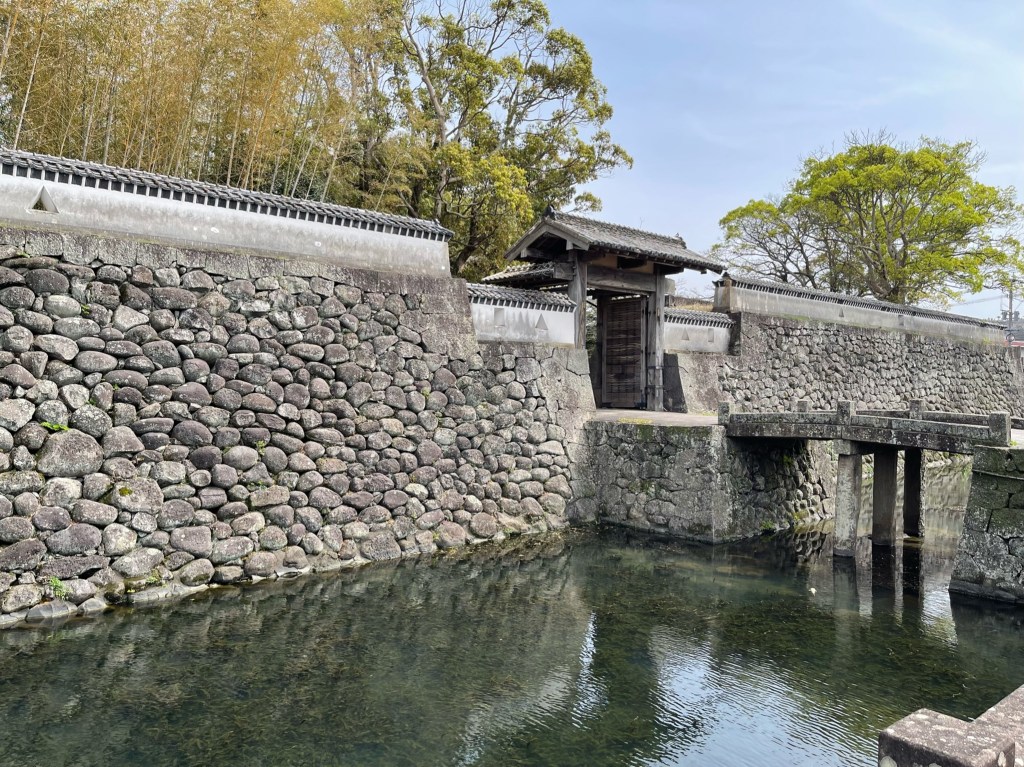
The Gotō Tourism and Historical Materials Museum (五島観光歴史資料館) is located within the precincts of the former Ishida Castle (石田城). It is hard to miss the castle moat although I did encounter some difficulties in locating the museum entrance. Thankfully a kind soul from the library (also located in the same grounds) pointed me towards the right direction.
The Gotō’s feudal lord resided in Ishida Jinya and requests made to the shogunate government to construct a new castle was continuously rejected for about 50 years before the Gotō clan received permission to build a new castle in 1849. The shogunate permitted the construction in order for the castle to serve as a defence against foreign threats from the sea, in which Western fleets had appeared in the waters off Gotō Island. The construction took 14 years and was finally completed in 1863, just 5 years before the Meiji Restoration.
Now, back to the museum. Despite being a Saturday, there was not a single visitor in the museum! It is quite a pity as despite being small, it was pretty interesting to learn about the local history of the island here. There were even some short movies / clips you can watch in the museum. While I did watch some of them, I had to shy away from certain types of videos due to my illogical phobia of underwater creatures. Since I was the sole visitor at that time, the museum staff was also kind enough (albeit a bit too eager) to entertain me. The downside here is that the explanations are all in Japanese.
My next stop was supposed to be the Former Gotō Lord’s Residence and Garden, but it was closed when I was there. Apparently, it is only open to the public for 3 months in spring (April to June) and 3 months in Autumn (September to November). Better luck next time!
It was hot and sunny despite the cloudy weather earlier in the morning, not to mention that it was past lunchtime but I somewhat managed to drag my feet to the Bukeyashiki-dori (武家屋敷) to visit the Yamamoto Nizō Art Museum (山本二三美術館). Yamamoto Nizō is an animation art director born in Fukue Island who is renowned for his work in several Studio Ghibli films including Castle in the Sky, Grave of Fireflies, Princess Mononoke and Spirited Away. There was surprisingly a good amount of English explanations in this museum, probably because of the immense popularity of the Studio Ghibli films.
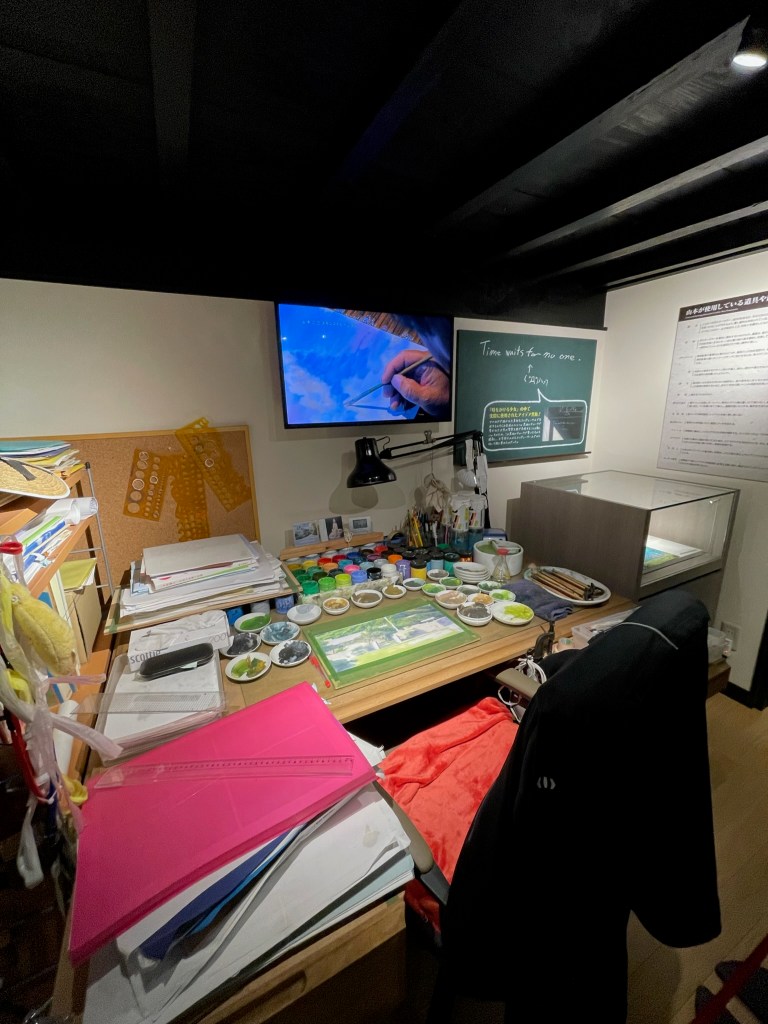
Before heading to the rental car shop, I made one last stop at the Fukue Island Samurai Residence Street Hometown Centre (福江武家屋敷通りふるさと館). There was not much to see here, although again I was the sole visitor at that time so the staff excitedly showed me around and gave some explanations, mostly historical backgrounds in regards to the island.
These two spots (the art museum and the hometown centre) are located on the Bukeyashi-dori, the Samurai Residence Street. The Goto Clan 22nd Lord, Moritoshi carried out a reformation ‘Fukue Naori’, in which 170 retainers were made to settle permanently in Fukue, creating this castle town. It was nice to stroll around here but it would have been more pleasant if my skin wasn’t burning.
I made a reservation with Toyota for the rental car and although it was just 5 minutes from the Bukeyashiki-dori, it is about 15 minutes from the port. There are other rental cars near the port, so if you are worried about lugging around a big luggage once you arrive via boat or ferry, you can always choose one nearer to the port.
I will continue the report on the rest of my trip to Fukue Island in the next post. Until then!
Info
Gotō Tourism and Historical Materials Museum
- Opening hours: 09:00 – 17:00 (until 18:00 from June to September)
- Admission fee: 300 yen
- Closing days: New Year Holidays
Former Gotō Lord’s Residence and Garden
- Opening Days and Hours:
- Spring (April-June): Saturday, Sundays and Monday: 9:00-17:00
- Autumn (September-November ): Saturdays and Sundays: 9:00-17:00; Mondays: 9:00-13:00.
- Admission fee: 800 yen
Yamamoto Nizō Art Museum
- Opening hours: 09:00 – 16:00
- Admission fee: 400 yen
- Closing days: Monday (or next day if Monday is a National Day), and New Year Holidays
References
Ishida Castle: Japan Castle Explorer
Gotō Sightseeing Website
Access
Entering Fukue Island
- By Air
- Oriental Air Bridge (ORC) operates flights from Nagasaki to Fukue Island (about 2-3 flights a day depending on the season); 30 mins
- There are also flights from Fukuoka (2-3 flights a day); 40 minutes
- If you are worried about using Oriental Air Bridge’s website (not the friendliest design), consider booking through ANA (codeshared, operated by ORC).
- By Ferry
- Roughly 3-4 hours between Nagasaki and Fukue Island depending on whether the ferry stops at Narao and/or Naru Island (2-4 times a day depending on the season).
- 30kg luggage limit.
- Around 5,000 yen one-way. The fare fluctuates depending on fuel price and is published 3 months in advance.
- Timetable
- By High-Speed Boat
- Roughly 1.5 hours between Nagasaki to Fukue Island, (3-6 times a day depending on the season).
- 10kg luggage limit. For oversized luggage, it is possible to send your luggage separately via ferry by handing it over to the office a day before. Details here.
- Around 9,000 yen one-way. The fare fluctuates depending on fuel price and is published 3 months in advance.
- Timetable
The Gotō Tourism and Historical Materials Museum is only 6 mins on foot from the Fukue Port. The Former Gotō Lord’s Residence and Garden is 6 mins away from the museum. The Bukeyashiki-dori and the Yamamoto Nizō Art Museum is another 5 mins away from the Former Gotō Lord’s Residence and Garden.
Aside from these few places in the centre of the town, it is best to use a rental car to get around. Buses are available but are infrequent and may not reach certain points of interest. Most rental car shops are located near the the port.
 Japan's Wonders